The Layering Principle – The Foundation of Ski Clothing
Proper ski clothing is not about one thick jacket – it is about a layering system where each layer works together to keep you warm, dry, and comfortable throughout the day on the slopes. This principle is especially important in the High Tatras, where weather can change rapidly and the temperature difference between the valley and the summit can be as much as 15°C.
The three basic layers are:
- Base layer (thermal underwear) – wicks sweat away from the body, keeps skin dry
- Mid layer (fleece/softshell) – insulates warmth, acts as the insulation layer
- Outer layer (jacket and pants) – protects against wind, snow, and moisture
Detailed Overview of Each Layer
Thermal base layer is the most important layer, even though no one sees it. Quality base layers made from merino wool or synthetic materials wick moisture away from the body and keep you dry. Never wear cotton – it absorbs moisture and cools down quickly. Choose a snug fit so the layer sits properly against your skin.
Mid layer provides insulation. A fleece jacket or thin down vest is ideal. On warmer days you can skip this layer, on freezing days add a thicker one. This is exactly why the layering system is so practical – you adapt to current conditions.
Ski jacket should be water-resistant (minimum 10,000 mm water column), windproof, and breathable. Details matter too: snow skirt (prevents snow from getting in), ski pass pockets, zippered venting, and a helmet-compatible hood.
Ski pants have similar requirements as the jacket – water resistance, windproofing, and breathability. Integrated gaiters at the bottom prevent snow from entering your boots.
Accessories That Are Often Forgotten
- Ski socks – special thin, warm socks reaching above the calf. Do not wear two layers of socks – this causes blisters. One quality ski sock is sufficient
- Gloves – warm, waterproof. Mittens for small children, finger gloves for older children and adults. Consider gloves with a hand warmer pocket on frigid days
- Beanie or balaclava – under the helmet. A thin beanie or balaclava protects ears and head from cold
- Neck gaiter (buff) – protects the neck and face, invaluable on cold days
- Sunscreen SPF 50+ – mountain sun is intense, even on overcast days. Do not forget lips (UV lip balm)
- Sunglasses – as a replacement for goggles during breaks
Mandatory Safety Equipment
A ski helmet is an absolute must. In Slovakia it is mandatory for children under 15, but we recommend one for everyone. Modern helmets are lightweight, comfortable, and stylish – there is no reason not to wear one.
Ski goggles protect eyes from UV radiation, wind, and snow. They are essential on sunny days but also significantly improve visibility in fog or snowfall. Choose goggles with interchangeable lenses for different light conditions.
Learn more about safety equipment in our article Safety on the Slopes.
What You Do Not Need to Buy – Rent from Us
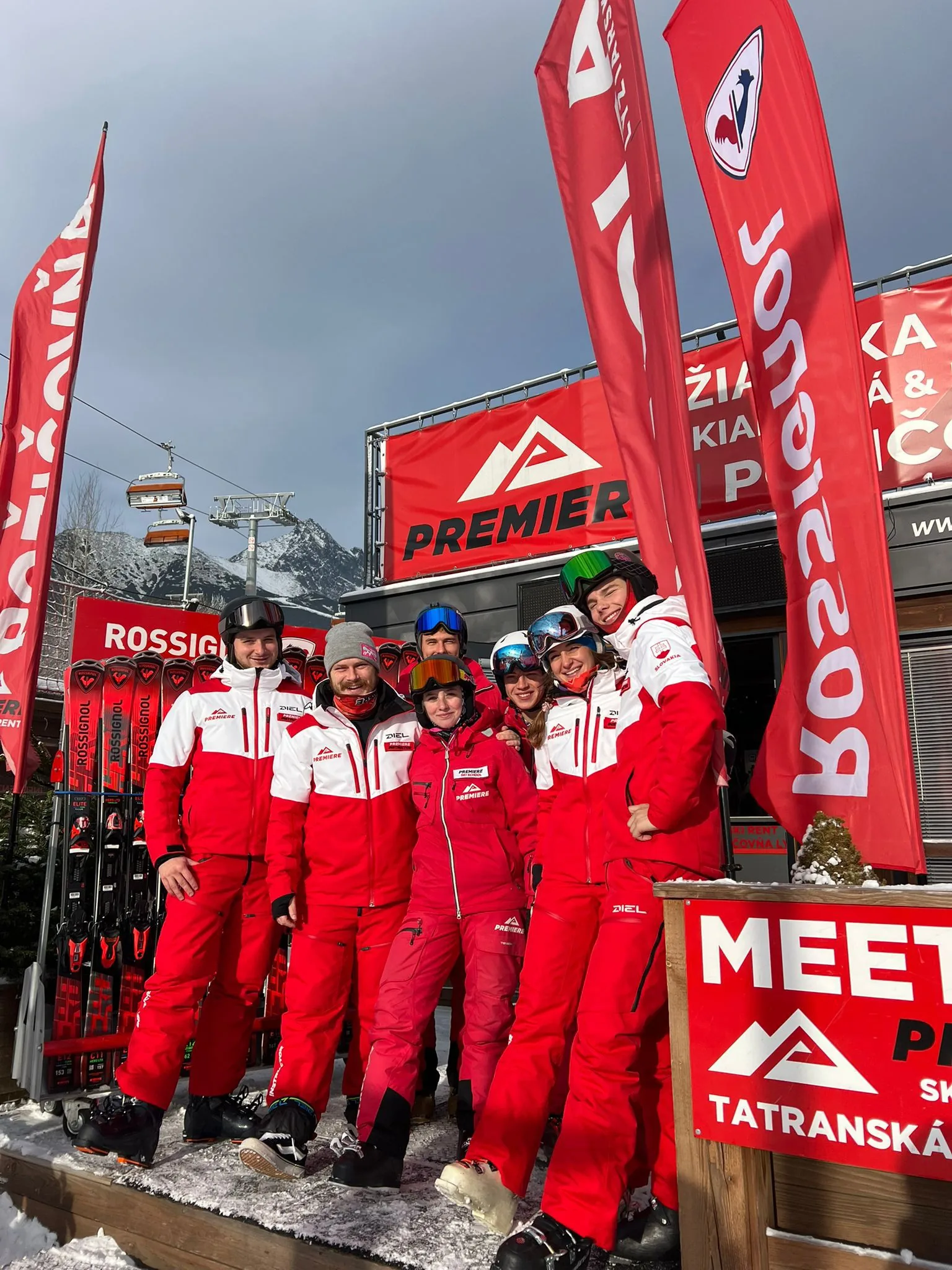
Skis, boots, poles, a helmet, and even a snowboard can all be rented at our Rossignol Test Centre. You do not need to invest hundreds of euros in equipment if you only ski a few days per year. Moreover, with us you get the latest Rossignol models, which are better than most equipment you could buy for the same money.
Learn more about our rental in the article Ski Rental High Tatras. The school and rental are open daily from 8:00 AM to 9:00 PM. If you are unsure exactly what you need, contact us – we are happy to advise!